
News

Occupy 2012: Why It Should Not Be 1968 Redux

Occupy Wall Street need not follow the path that led to the ’60s counterculture’s failures.

New York magazine’s front page is bullshit. Let’s start there.

The article about Occupy in 2012 is quite good, but the headline and imagery is absolute shit. It contains a symbolic message, and the message is completely wrong—that this current revolution is dominated by dirty long-hairs, privileged children, acid casualties, anarchists, communists, pranksters, rockers, dopers, philosophy graduates, bums, the lazy and the pleasure-seekers.

OWS is all of these people and more—much more. Its absorption capacity is limitless, or near-limitless, as it includes one-percenters, libertarians, doctors, ex-bankers, ex-quants, families, small business owners, the creative class, journalists, and many millions who are gainfully employed and otherwise not professional activists and slackers.

Every revolution is its own creation. A revolution is not a replicant or a redux. One generation’s movement is not another’s. How could it be? To use another revolution’s vocabulary—you dig?

Perhaps, on some superficial level, Occupy in 2012, the Year of Quetzalcoatl (the Feathered Serpent), of the Rapture, the year of Shamanic Psychedelic Dance With Death, will resemble 1968 in America—protests waxing in the year of an election.

It rather seems as if New York magazine is stirring the collective reminiscence of the Chicago 7, the Weathermen, the clashes with police at the Democratic National Convention in Chicago, and so on.

Who gives a fuck? The Chicago 7 are gone. The Weatherman have been cast asunder. DNC 1968 is just a bunch of memories in a photo album, a reminiscence by those who would like to reclaim their youth.

Erase it. It must be buried if we are to get anywhere at all.

New York briefly profiles one Max Berger, a “professional activist” (reeks of Abbie Hoffman and Jerry Rubin), whose great contribution to the November 15th eviction was tweeting “Press not being let in. This is gonna be some Tiananmen shit,” as if the events at Zuccotti Park bore any resemblance to China’s student uprising.

The events of Tiananmen Square found their birth and death in Tiananmen Square. They may echo across the generations, and infiltrate our vocabulary with such invocations, but Tienanmen’s wave does not synchronize with Zuccotti Park’s, if we are looking at these geographic spaces as pure symbols. The revolution is different. It is always different. Berger’s comments speak to some of the numbskullery attending Occupy Wall Street, of which I was a very early supporter, but now constantly feel compelled to defend in conversation with colleagues, friends and family.

So many times have I had to say, “But, it’s not about a park,” that over a month ago now I’d had enough and called for a move beyond the park, if only to limit the time I spent arguing on OWS’s behalf. The message had become so distorted in the course of transmission that the people who would benefit most from Occupy’s call-to-arms (the middle class) could only fix their gaze on whether protesters should be in the park or not. Flash mobs, spontaneous, guerilla protests, and crafting of high impact messages are the way forward. The park lost its efficacy long ago.

To Berger’s credit, he goes on to state, “My fear is that we become the worst of the New Left. I don’t want to live in a fucking commune. I don’t want to blow shit up. I want to get stuff done.” If there is to be a New Left, it must circumambulate 1968 and learn its lessons—avoid invoking any catchphrases or historical geographic spaces.

There must be a new wave in the left.

Hunter S. Thompson, writing in “Fear & Loathing In Las Vegas,” in what is perhaps one of the most beautiful and melancholic moments of American prose, looked at the late ’60s in retrospect:

There was a fantastic universal sense that whatever we were doing was right, that we were winning…

And that, I think, was the handle—that sense of inevitable victory over the forces of Old and Evil. Not in any mean or military sense; we didn’t need that. Our energy would simply prevail. There was no point in fighting — on our side or theirs. We had all the momentum; we were riding the crest of a high and beautiful wave…

So now, less than five years later, you can go up on a steep hill in Las Vegas and look West, and with the right kind of eyes you can almost see the high-water mark — that place where the wave finally broke and rolled back.”

That mark is not our own. It is not this generation’s mark. We must reach our own but also stem the tide from rolling back into the deep.

What we are experiencing now is a certain velocity, a movement toward something, and it is only now turning into some sort of a wave pattern.

As Thompson also noted, it was the drugs that doomed the ’60s—doomed everything that had been imagined by those who sought to change the world with energy and momentum. The fright the drug culture conjured in the heart of authority, along with the casualties it rained down on the American landscape, created a massive counter-force that eventually obliterated it; though its ideas have seeped into the mainstream over the years in the form of environmentalism, organic foods, co-ops, green economy, and so forth.

This movement is open-source—the ’60s were a dead-end. That generation failed and failed miserably: They were obliterated by their selfishness and have now transformed into the counterforce. That generation is now in power and we are fighting them. And Generation X ‘s apathy allowed them to very easily embrace the status quo, so they’re rather immaterial. Let us hope that Occupy 2012 does not become 1968 Redux, for that truly was the beginning of the end of that movement.

The article contends that OWS needs leaders to direct the movement. Indeed, it could use a figure like a Martin Luther King or someone in the anonymous but highly influential tradition of Emmett Grogan and The Diggers. As far as I can tell, there is no one of that intellectual, creative or rhetorical caliber in the movement. The leaders may sense that something is wrong and can identify the causes, but this alone is nothing special. Everyone with a mind is able to see the scenery masking reality.

OWS, however, does not need radical leaders like Abbie Hoffman and Jerry Rubin—men and women who capitalize on their radical leadership abilities for their own ends.

Truly, we do not need another 1968.

And, perhaps instead of imagining how OWS will evolve in 2012, we should remember that still the corporate psychopaths roam free and are even now attempting to “fix” what they broke.

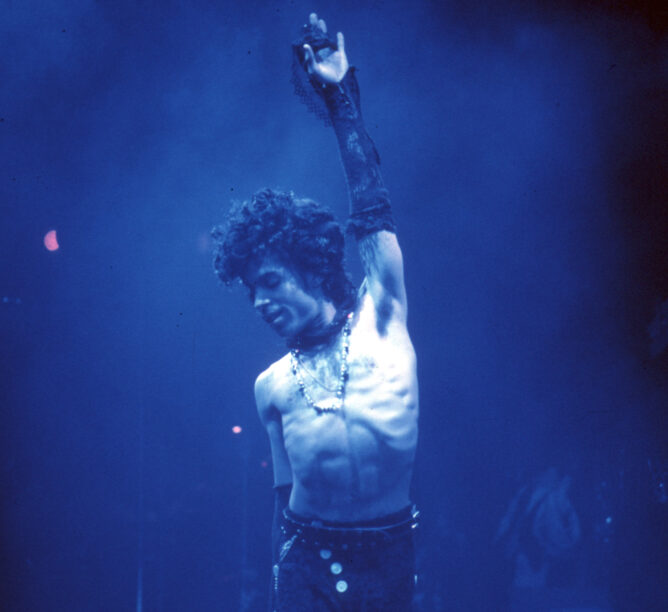
[Photo via WGXC]

  1. December 01, 2011 at 5:03 pm, shane wynn said:

    I don’t see many acid casualties but I do see alot of adderall/ritalin casualties and alot of facebook/twitter fried egos on display, but i suppose we can work that out in the long run. at least i hope we can.

    As far as comparisons to the sixties go, I’d say we’ve got more to lose. The stakes are higher. The hippies returned to the fold and became yuppies, but we’ve got no fold to return to. No Future has made revolution a necessity.

    Reply

  2. December 01, 2011 at 5:28 pm, OrchestratedPulse.com said:

    One of the movement’s core principles is horizontal, non-hierarchical organization that empowers everyone, not just a select few.  One of the people of a high “intellectual, creative or rhetorical caliber” who helped shape the movement, stepped back because demagoguery is not the purpose- real change starts with individuals feeling empowered and supported to take a stand.  Your ideas about flashmobs, guerrilla direct action, and more targeted messaging are brilliant observations.  However, you don’t need some leader to direct you to make it happen- you are that leader.  This movement is not about asking permission, it’s about taking responsibility and creating the actions we want to see.  You are empowered to make your brilliant direct-actions occur.  If there is any way that I can help, I’m willing to participate! Solidarity!

    Reply

  3. December 04, 2011 at 10:51 am, Nihilizo said:

    This article gives me mixed feelings. While on one hand I’ve been talking a lot with fellow occupiers and people outside the movement about how we need to learn from our mistakes in the 60′s, I don’t think we need to necessarily distance ourselves.

    The 60′s didn’t fail, it just didn’t succeed in a way that most people wanted to expected. Drugs didn’t destroy anything.

    The system is fucked. There is no hope at this point for reform or change, our mission now as creative individuals is to build a new society based on hope inside the decaying shell of a system.

    Reply

  4. December 12, 2011 at 5:23 pm, Anonymous said:

    Interesting take.  We’re a new digital publisher and we have a great title on the roots of the counterculture that folks may be interested in.  Take a look: http://www.nowandthenreader.com/dawning-of-the-counter-culture-the-1960s/

    Reply

Add New Comment

Showing 4 comments
Subscribe by RSS