

Entertainment

Cabinet of Subversive Books: Neal Stephenson’s ‘Cryptonomicon’ & the dream of a data haven

Cabinet of Subversive Books” profiles fiction and non-fiction, both popular and underground, children’s and transgressive, poetry and tomes, comic books and even romance novels. And if you don’t see one of your favorites now, don’t despair, for it might well make an appearance in due time.

Reading these books won’t get you arrested, but they will bend and distort one’s mind with wonder and titillation, and hopefully radically shift one’s thinking about civilization.

Feel free to make suggestions—I will read them and report back. But some favorites will have to be kept to myself, folks (even if suggestions are made), because an artist never reveals his most important sources.

Nevertheless, the books to be found in this series will send readers off in a number of fruitful tangents, by which they might (might!) come across my more secret hoard.

After a fairly long break, punctuated only by the Christmas Edition, Cabinet returns with Volume 7, in which we take a look cyberpunk and post-modern extraordinaire Neal Stephenson‘s 1999 classic “Cryptonomicon,” a book that pursues two parallel paths: one involving cryptographers and a paramilitary group, and the other which features hackers attempting a project that is wonderfully relevant to our current times.

“Cryptonomicon”

In the fall of 2011, or perhaps it was the summer, I was drifting from a William S. Burroughs, Philip K. Dick and Boris Vian kick to cyberpunk, a genre that I had always avoided after being forced to read William Gibson’s “Neuromancer” for a college science fiction course. This, despite the fact that I very well knew that cyberpunk had its origins in PKD and Burroughs, as well as in two other personal favorites, J. G. Ballard and Thomas Pynchon (“Gravity’s Rainbow,” in particular), not to mention its cinematic analogue in the great film “Bladerunner.”

Years back, Gibson’s style had no appeal for my tastes, and I usually leveled the charge at his prose, which I have since recanted for I quite enjoy his short fiction and have given “Neuromancer” another try and it is, indeed, quite good. The circumvention of Gibson also meant that I avoided Bruce Sterling and Neal Stephenson, amongst others. What a mistake, especially now that I’ve experienced Stephenson.

About five years ago, an acquaintance had suggested I read Stephenson’s break out, post-cyberpunk novel “Snow Crash” because I would find in it themes that I quite enjoyed, as well as a direct line back to Pynchon’s “Crying of Lot 49″ and “Gravity’s Rainbow.” “Very well, then,” I thought. “Eventually. Eventually.”

And then I promptly forgot about Stephenson, until I was researching material for my own fiction project, coming across the idea of a data haven, which hyperlinked to “Cryptonomicon.” Reading the summary, I was slightly unnerved by some parallels between my own project and Stephenson’s novel, so I refused to read it until I’d finished my project. It turns out that the parallels were none too parallel at all once I picked up a copy last year. And, truly, the novel has been an intellectual, scientific, and technological trip.

Hoping to avoid spoilers, I am only going to give the sparest of details, so that anyone reading this entry in “Cabinet of Subversive Books” will be able to enjoy the twist and turns in the plot and sub-plots.

Like “Gravity’s Rainbow” before it, “Cryptonomicon” is labyrinthine and Menippean in scope and detail. Also like “Gravity’s Rainbow,” Stephenson’s tome involves little known World War II covert histories. The war is big enough, however, for both Pynchon and Stephenson to construct such detailed, stemwinding plots full of Clinamen-esque swerves.

Since I see this entry as more of an encouragement to read the novel than a traditional review, I will say that it might well be essential reading for anyone interested in internet blacklist bills SOPA and PIPA, Lamar Smith’s data collection bill H.R. 1981 and the international treaty variants The Anti-Counterfeiting Trade Agreement (ACTA) and Trans-Pacific Partnership (TPP). A lot of what Stephenson’s characters are up to in the late ’90s narrative run parallel to these concerns.


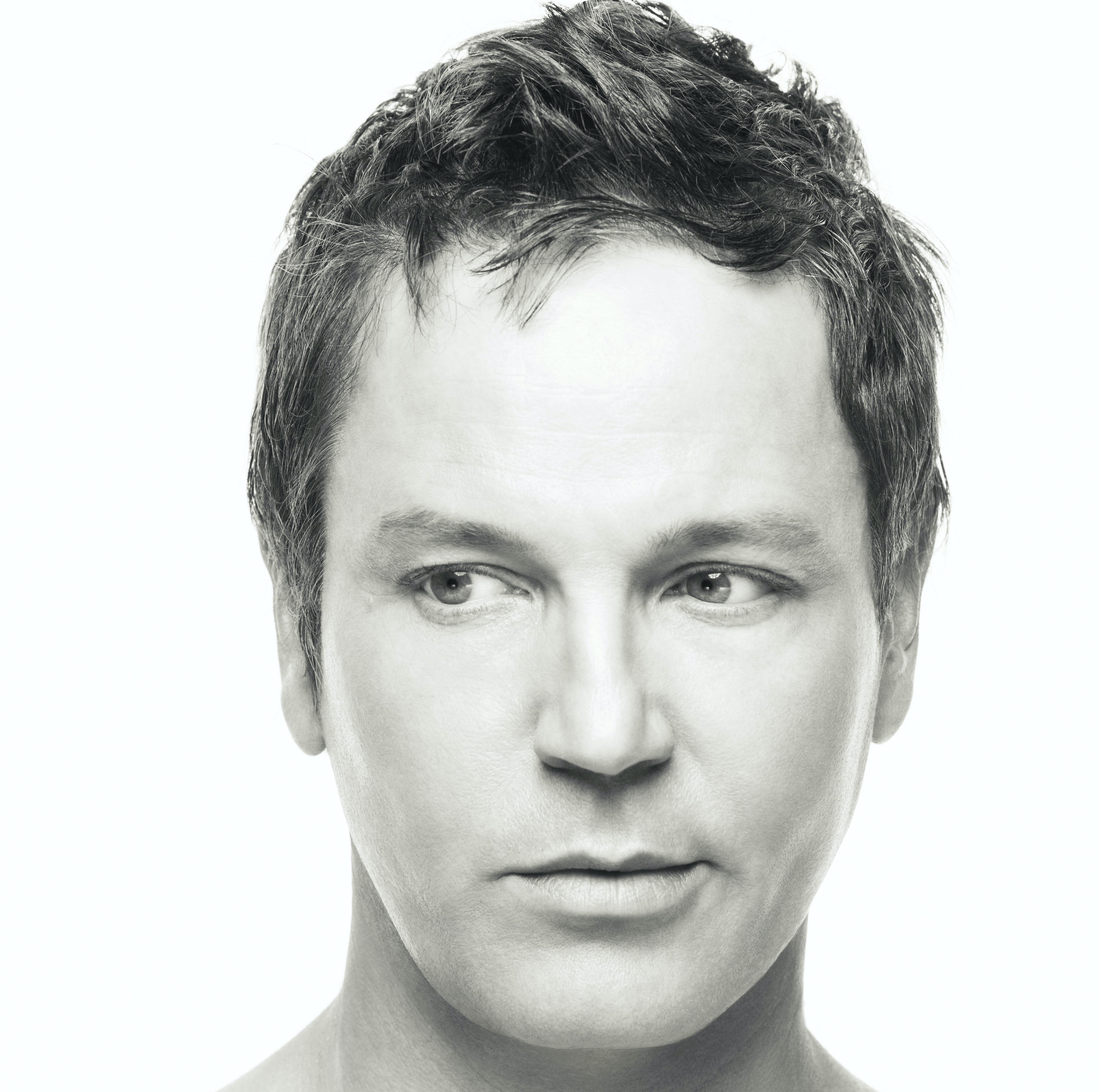
The author himself, shaving his head with a sword.

“Cryptonomicon” features a World War II narrative involving cryptographers Lawrence Waterhouse (an American mathematics prodigy) and Alan Turing, a real mathematical genius who worked at the UK code-breaking center Bletchley Park. Waterhouse is part of Detachment 2702, a covert program aimed at concealing the fact that Bletchley Park has cracked the Nazi’s Enigma Code with the first programmable electronic computer Colossus. Waterhouse’s military counterpart is the American Bobby Shaftoe, a Marine Raider who leads a team who excel at convincing the Germans the Enigma has not been broken, by creating diversions, such as one inspired by the Monty Python-esque Operation Mincemeat.

In the ’90s storyline, Waterhouse’s eldest grandson, Randy, is a hacker who works for the start-up Epiphyte Corporation, a project begun with his long-time buddy Avi Halaby, which is, amongst other things, attempting to build a data haven on an island in Western Pacific Ocean.

Readers feel the narratives coming in proximity to one another, then bouncing away at strategic moments like interference in wave patterns or the polar opposites of a magnet. Stephenson deftly delays the full force of this intersection for some time, holding the reader in suspense like a great mystery or adventure novelist.

For my money, one of the finest moments of the novel is the chapter “Sultan,” which involves a character giving a perfunctory presentation to various parties involved with the data haven, before getting to the meat and potatoes of the gathering. The character, who I shall not name, describes the internet as a cyberspace without boundaries but subject to chokepoints, and these chokepoints are created and maintained by governments (SOPA, PIPA, H.R. 1981, etc.).

The character goes on to say, “any Internet application that wants to stand free of governmental interference is undermined, from the very beginning, by a fundamental structure problem,” adding “Bottlenecks are only one of the structural barriers to the creation of a free, sovereign, location-independent cyberspace.”

“Another is the heterogeneous patchwork of laws, and indeed of legal systems, that address privacy, free speech, and telecoms policy,” states the character to his guests. “The policy of any given legal system toward privacy issues is typically the result of incremental changes made over centuries by courts and legislative bodies… with all due respect very little of it is relevant to modern privacy issues.”

Stopping for a moment, we can consider superimposing this monologue and its implication on top of the U.S. Congress’ work with SOPA, PIPA, H.R. 1981, as well as treaties ACTA and TPP, although the character doesn’t hit on what I believe is the most vital offense of these bills and agreements: That they attempt to do one thing (stop online piracy or child pornography), but in doing so create the legal mechanisms for stifling free speech, privacy, and all the rest.

“Our policies concerning free speech, telecommunications and cryptography have evolved from a series of simple, rational decisions. But they are today so complex that no one can understand the, even in one single country, to say nothing of all countries taken together…

…Time to star over… A very difficult thing to do in a large country, where laws are written by legislative bodies, interpreted by judges, bound by ancient precedents… I say that the law here is to be very simple: total freedom of information.”

There was quite a bit of editing in the above quotes to limit spoilers, but the essence of the chapter is there, of course.

Stephenson certainly is sympathetic to encrypted data, but when asked recently in a SlashDot interview if there should actually be a data haven, he responded:

At this point, that is probably a technical question that I might not be competent to answer. I can carry a gig of encrypted data on a thumb drive now, and it doesn’t cost much. Soon it’ll be smaller and cheaper. Millions of people in different countries carrying gigs of data on thumb drives, iPods, cellphones, etc. make for a pretty robust distributed data storage system. It is difficult to imagine how one could build a centralized, hardened facility that would be more robust than that.

Stephenson adds that he hasn’t thought much about data havens since writing “Cryptonomicon,” but it occurs to me that even with encrypted “thumb drives, iPods, cellphones, etc.,” and a future of even smaller encrypted devices, it doesn’t get around government “chokepoints,” as he called them.

Perhaps a data haven is more necessary now than ever.

Neal Stephenson recently published the novel “Reamde,” a novel about Chinese hackers, gold farming, MMORPGs, social networking and Russian thugs. 

Read Volumes 12, 345 and 6 of “Cabinet of Subversive Books.”

[Photo: Ryan McVay]

  1. February 01, 2012 at 6:00 pm, Pangbwal said:

    Just checked out a copy… Pretty stoked about it.

    Reply

    • February 01, 2012 at 6:32 pm, D. J. said:

      Right on.

      Reply

  2. June 15, 2012 at 4:00 pm, Neal Stephenson’s surreal cyberpunk novel ‘Snow Crash’ headed for the screen | Death and Taxes said:

    [...] headed for the screen By DJ Pangburn 1 min agoIt wasn’t too long ago that I wrote a “Cabinet of Subversive Books” entry for Neal Stephenson’s sprawling, post-modern “Cryptonomicon.” The [...]

    Reply

  3. August 01, 2012 at 4:00 pm, Cabinet of Subversive Books: Irvine Welsh’s short story ‘The Acid House’ | Death and Taxes said:

    [...] Books: Irvine Welsh’s short story ‘The Acid House’ By DJ Pangburn 1 min agoCabinet of Subversive Books usually considers fiction and non-fiction books, not short stories. But for Irvine Welsh’s [...]

    Reply

Add New Comment

Showing 4 comments
Subscribe by RSS