Music

Interview: Dr. Dog discusses their new album ‘Be the Void’ and their evolving philosophy

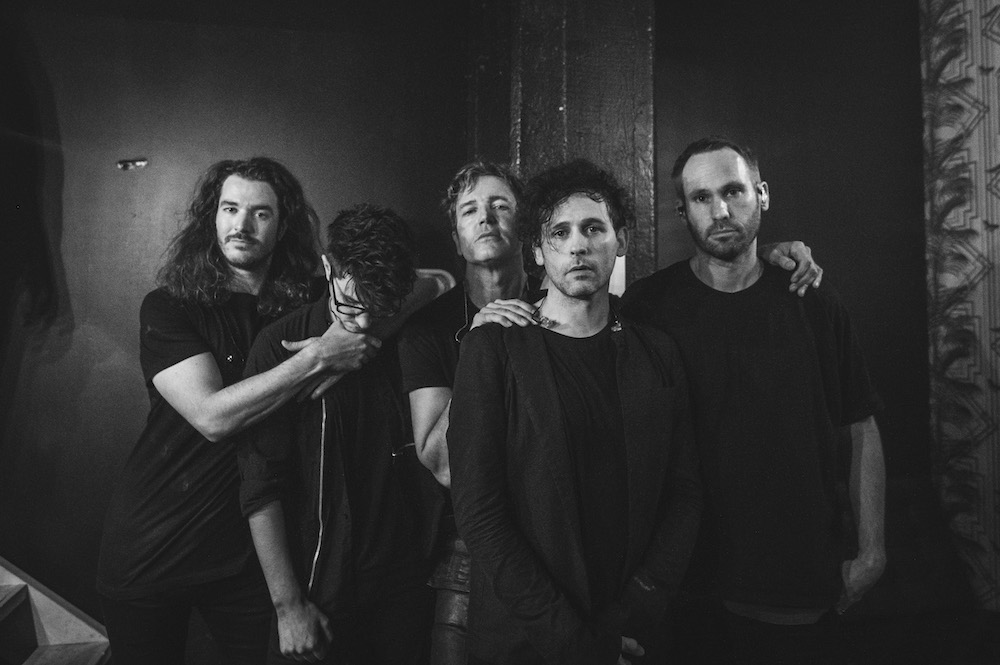
With lead members Tobey Leaman and Scott McMicken collaborating on songs for nearly 20 years, Philly bar-rock band Dr. Dog only recently solidified their lineup with the addition of two new members. As McMicken explained in our recent interview, there’s no way to overstate their significance, and indeed the new members, drummer Eric Slick and multi-instrumentalist Dimitri Manos, have clearly added a level of depth and expansiveness, which is evident on the band’s latest album Be The Void.

Not only have the new members contributed to the band’s sound though—McMicken also claims that emotionally, the band has never felt more enthusiastic about touring and recording. While developing a fanbase through years of performing for anywhere from 30 people in a dive bar to 3,000 or more at festivals like Lollapalooza, Dr. Dog also went through somewhat of a revolving cast of members. But after picking up Slick on the rebound from playing with King Crimson guitarist Adrian Belew, and officially adding Manos, a longtime touring member, the band sounds more confident on their new album than ever before.

Prior to their show in Los Angeles last week, McMicken talked to me about the growing Philly music scene and the pros and cons of working with a producer, as well as Dr. Dog’s evolving philosophy and what the band’s meant to his personal life. There’s also an exclusive video from Dr. Dog’s performance on the At: Guitar Center with Nic Harcourt podcast, which is available for download on March 10th.

With you and artists like Kurt Vile getting so much praise, do you see a growing scene in Philadelphia or are people just now coming around?

I don’t know really. I’m by no means a mouthpiece for the Philly music scene. I do have a lot of friends in bands and it is a very diverse set of musicians pursuing their own goals. All of the bands I know have been working for a long time by now too, so they’re just kind of closer to evolving in to their own thing without any pretenses or pressures about it.

So there’s a lot of garage rock stuff everywhere, this kind of Raw Power type-deal, in a way kind of like Purling Hiss, but they’re all on their own completely authentic thing and they’ve been doing it forever. So now it’s like the people are finally catching up with them, like this has been become in vogue again, just raw, lo-fi recordings with great guitar playing. Also, I think there’s a much broader acceptance of what pop music can be and how a song can present itself in different ways.

Having been around for such a long time, how are you viewed in your hometown now?

We get a lot of support at home. The radio station XPN has always been super cool and when we do get to play hometown shows, the crowds are always awesome. There’s definitely still some naysayers, people who like to look at it as just this pretty trivial mining of history and ripping off classic rock and stuff. There’s always a pretty steady flow of that kind of critique, but at home the papers have always written nice stuff about us, the radio stations have been cool, and our crowds there are bigger than anywhere else. I feel like Philly is very proud of its own. There’s something really cool about Philly in that way.

Have you noticed those critiques and Beatles comparisons start to dissipate with the new album?

Yeah, it’s been quite a bit less with this record, and that is refreshing. We’ve never really been that affected by what people have said. I think we would know ourselves best if we were treading in to some kind of hoax. The thing has always been, and now more than ever, very insular. We feed off of what we actually have inside of us and focus on that and tune everything else out. It’s about just enjoying yourself, so that’s kind of been the main measure of if we did something good, just the enthusiasm within ourselves.

What do you think the new members’ biggest contributions were on this latest album?

This new record was totally enabled by Eric and Dmitri’s introduction in to the band because for the first time I really embrace playing guitar, whereas I had always seen guitar as this sort of necessary tool that I had to do. I love playing guitar, but I never really loved it like I do now, and I think that’s come from having the band arrive at this place where everyone is really steeped in their instrument. Everybody’s really grown in to their instruments more, and I think that really what we’re looking for is what it sounds like when everyone sticks to their own role, instead of somebody just executing an idea with an instrument.

We did a lot of live tracking too, just one take, more so than ever before, and Eric is what makes that possible because he delivers every single time. He always got his parts within like two takes. Like everything you hear on that record he came up with less than an hour after hearing the song, and that really pushes everyone to get it quicker too. He enabled this fast-paced, more spontaneous spirit we were going for. He kicked all of our butts in to working faster and he enabled us to create the sound we wanted because of how good he is too, so there’s no way to overstate his influence on the band as it’s revealed on this record.

Do you think you were happier during the songwriting and recording process overall this time? Was there more enthusiasm within the band at that stage?

Totally. There was a big strong forcefield around everything this time and we set it up that way. We knew that was the best avenue to take and it’s interesting to see some of the things that have been written since the record’s come out. Like “Dr. Dog Returning To Its Roots” or this about-face kind of thing. It didn’t feel like that. It wasn’t this conscious kind of thing. It just felt like, well here we are. These two new guys had brought so much to the band and we really solidified things so much.

What made you decide to make Dmitri an official member of the band?

He’s from Philly originally and we’ve known him forever. He played on Easy Beat, so he’s been sort of a peripheral member of the band for almost ten years. So now that he’s in the band, just as a way to rope him in to see him more, that’s been really awesome. He definitely makes touring and recording better. He makes every decision we make better. He’s just kind of this mirror on to something true and honest and simple about stuff that, at other times, might get away from you.

He’s always got an idea, and his role in the band is so amorphous. He works with rhythm and percussion, but he’s always got something to suggest about everything and he also has that filter on a lot of songs to enable a more abstract side of things. And in keeping with his personality, these sounds can be generated from anything, even from a cow. A lot of what he was working with were the sounds of a cow or a rooster or a horse, and manipulating sounds by turning them backwards, or slowing them down or whatever. All that stuff made it on the record.

Can you point to any particular instances of those animal noises on the album?

There are a few really obvious cow sounds in “Do The Trick”. When it comes in that verse where I say “I’ve been split down the middle” and the band cuts, there’s a really obvious cow sound there. We actually discovered that if you aren’t paying attention or looking for a cow sound, it sounds like a really mean slide lick, but it’s a cow.

That more abstract side seems to balance out yours and Tobey’s ideas too. Do you two consciously split the songwriting down the middle with each album?

Yeah, we always sort of start with those parameters. With albums and shows, it’s always been even, an equal amount of his songs and mine. Usually we try to alternate them one after the other, and I’m pretty sure the sequencing stays true to that. We’ve deviated a little bit from it on albums, just because when you get in to sequencing, sometimes it doesn’t always work out, but we always start off with that goal, just so it stays balanced and you don’t hang out too much in Scott’s world before going back to Tobey’s. We just really try to hammer in the singular voice that we’re both ultimately trying to get at while being two different songwriters.

After working with a producer on Shame, Shame, what made you decide to produce this record on your own?

Well, we actually, upon the first conversations, knew we didn’t have any interest in working with producers. So we kind of X’ed that conversation out, but a guy named Ben Allen, a really incredible engineer and producer who’s worked on some awesome stuff like Animal Collective and Deerhunter, a lot of really cool, experimental stuff, was very vocal about wanting to work with us. So we went to his place and worked with him for like a week and it was awesome actually.

Then as it got closer to go time, we just thought about it more and it was like, everything about working with Ben was awesome, but I don’t know if this is really the time to do that. We were all aware of how much we had on our plate, just as far as ideas and the inspiration to get things done, so we opted not to, not because of any difficulty in our experience with Ben, but just because we felt confident enough on our own.

Were there any lessons you were able to take away from the experience of working with a producer on the last album?

In Rob (Schnapf)’s defense, having never really set forth with that goal of working like a real band and recording more live, we were really unprepared. Like we’d talked with him a bunch and came up with a clearer understanding of what we wanted to do, but then we showed up totally unprepared. So yeah, I think if we were to go in to something like that again now, we’d be a lot better. We’d be a lot quicker with it, but we didn’t really have it together, and it wasn’t out of neglect. We just literally had no idea what we were doing at that point in time.

We had a bunch of songs and tons of demos. We weren’t unprepared in that way, but we weren’t ready to commit to actually getting takes, so we just kind of got what we could done and then took it back to Philly to tinker with it. But everybody was real happy with the record. That record did good for us and it definitely kept us progressing and gave us a new angle, while also giving us a new batch of songs to further the live show with a bit more ambition.

I read you say in another interview how touring wasn’t very conducive to songwriting though. Would you still agree with that?

There’s no perception on my part or anyone’s of touring creating any barriers in our lives. I think we tour less than a lot of people think we do. In reality, we still have a lot of time at home. But I think what it does is just focusing on getting through the day and playing the show and keeping happy, and that shifting daily experience, makes it so that when you go home and none of that stuff is part of your experience, there’s an increased sensitivity to what your life is really based on in reality, emotionally, and in relationships. So I think that has influenced our songwriting a lot. I don’t know. It almost feels like a crash course. I know when I get home, I get this fire lit under me where I just feel like I’ve gotta live fast in a way. Sometimes I’ve gotta make things really bad or let things go sour in order to feel that end of it.

Early on, I think we were very fearful of letting darker aspects of life, or more challenging things to accept, in to our music. But, not just as a musician, as a person you don’t have to be so neglectful of what seems dark to live a happy and peaceful life. And with the band as a vessel for that part of life, I think that’s allowed me a lot of chances to actually deal with that. If it wasn’t for singing for people and writing songs and stuff, I don’t exactly how else you’d find that kind of dialogue and that opportunity to hang out in these different spaces of your observations or awareness of what’s going on inside you. So I’m really thankful for the band to just have that

So do you feel like you’re evolving along with the band as a person then?

I think it really forces it, because there’s a lot about it that can bug you out. It’s weird. It’s one of those things where you can always only be satisfied when you’re looking for a certain result. You can make a good record, but then you’ve just got to make another one. You can play a good show, but you’ve just got to play another one. You can write a good song, but then you’ve just got to write another good song, so if you’re only looking at the endpoints of your efforts then you can become really unhappy.

If you can really just focus on what you enjoy about being a part of the process and repeat that, then you can sustain happiness more. And yeah, the band has been an undeniable outlet for that very experience in life for me. Many things are though. Relationships are that way too and I’m particularly bad at that. I’m constantly wondering what that’s supposed to mean or what something’s defined as. Where is this going? What do you want from me?

When really if you just ignore any notion of what you’re supposed to be, then you’ll understand the situation in an inherently more direct and honest way and you’ll just go with it. And if you have the presence of mind to adapt to things as they change and as challenges rise, then you’ll be fine. Life is certainly gonna batter you around as everybody knows. Things can go any direction at any given moment, but even those become easier to deal with if you at least understand their impermanence.

Could the song “Turning The Century” be seen as a metaphor for the current philosophy of the band then?

Yeah and what that song means to me, the band gets thrown right in to it. It’s just kind of about enjoying the process and not really thinking about where you’re going with it, not in a non-committal way, but just being present and longing to get the most out of what a moment really has to offer. I feel like that’s why the band is so good for my life is that steady experience of being in a context where you have to choose in a moment, this is either very simple and in your hands and I’m at home wherever I am with these guys, or this is weird, I’m being looked at by people.

There was something so effortless about it though, and it was never intended to turn in to a full song. I just want to be a better guitar player, and I want to be able to accompany myself in more interesting ways rather than just strumming through. So that song was an exercise for me in trying to write a guitar part that was more of a challenge and it was really satisfying for me in that regard, because it was really hard for me to play at first. I had to practice it a lot to be able to do it and sing at the same time, so once I got that down, it was one take, playing guitar and singing in to one mic, to get that whole thing start to finish and that was it.

We actually took that demo, which was just me in my kitchen on one mic singing and playing that whole tune, and overdubbed the drums and bass and all the other stuff on to that. So that was cool because there was kind of this essence to it. It was something that was already done. It was a performance of me playing guitar and singing that I was super happy with. So then everything that went over top of it was just able to feel loose because there was already kind of a spirit to it. I was really happy with how it came out.

I read there were about 30 songs recorded or demoed for this album. Is there any chance of an EP later on in the year?

Yeah, actually that’s totally in the works. I think, all in all, we had about 26 songs done for this record, so we have a lot sitting around and then a bunch we didn’t even get to. So whenever the time’s right, we probably want to do something like the Passed Away thing. We’ve kind of set that up as an outlet for that, but we’ve never done a Part Two, so hopefully by the end of the year we can put out a collection of 10 or 12 songs that just kind of got scrapped, “orphans” as Tom Waits says. We’ve got some older stuff and some demos that are just cool as they are.

Do you recycle a lot of old ideas or go back and revisit songs over the years?

Oh yeah, we’ve always done that, except we didn’t on this record. This record is the first one where we focused only on new songs, but mostly all our other albums have songs that in some cases were written five years apart or whatever. There’s always such a backlog and then there’s new ones. With two songwriters, there’s always tons of stuff, which is nice because there’s never been a lack of material. But with this one, in keeping with everything that went in to it, just this kind of assessment of who we are now and playing to our strengths, the new material seemed to be the most inspiring.

Add New Comment

Showing 0 comments
Subscribe by RSS