
Author Archive

Interview: The Concretes

March 4th, 2011 by Drew Fortune

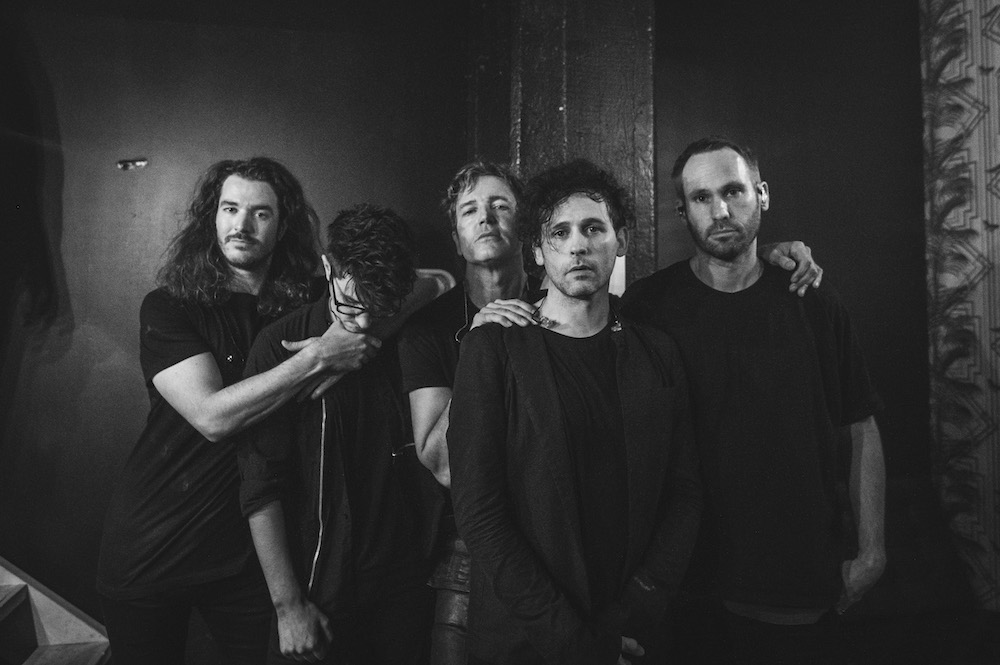
It’s been a while since The Concretes’,  with their new single “You Can’t Hurry Love” appearing on the “Elizabethtown” soundtrack along with The Cardigans and The Hives, have made a splash in the States, helping to usher in the short-lived Swedish indie rock craze.

[slideshow post_id="58342" exclude="5"]

With The Cardigans and The Hives currently residing in the “Where Are They Now” file, The Concretes have endured lineup changes, toxic in-fighting, and a four year hiatus after the lukewarm response to the 2006 release “Hey Trouble.” When founding member and lead singer Victoria Bergsman split from the band, drummer Lisa Milberg stepped up to the mic, discovering a true knack for songwriting and a beautiful, haunted voice which finally has room to breathe.

Late last year, a rejuvenated Concretes released “WYWH” and are currently wrapping up a U.S. and Canadian tour. The album, full of pulsating disco beats and thudding bass lines, is a bit of a departure for the guitar based pop hooks of yesteryear. But as Milberg believes, creativity is a muscle that you have to keep flexing, and with “WYWH,”  The Concretes prove that they are not content to rely on formula.

After the 3 year hiatus, was it cathartic to make a new record? Did problems of the past get burned away, or were new ones created?
I think we just woke up one day and realized we were ready to make a new record. At the time of recording it wasn’t any more dramatic than that. Usually that impulse doesn’t take three years, but we had had some pretty special circumstances as you know.It took a while for all of that to catch up with myself and the band, but once it did I was exhausted. So I needed three years to rest really, and to let things sink in. But once we got into it again, it was a very pleasant procedure; it just felt very natural and simple…probably more so than with any album we’ve done in the past.

Personally, what did you do during the 3 year break? Any new hobbies or musical endeavors?
I worked on different music projects mostly. My own little Milberg thing I do, as well as collaborations with others. And in between songs I work with graphic design and set design. Most of the band have other music projects aside of the band. I think it’s a really good thing, it feels like everyone comes to The Concretes with a clear, open mind that way.

Is creativity and music making like a muscle, in the sense that if you don’t use it, it gets weak?
That’s very true, and definitely one part of it. When I find the focus to sit in front of my piano a few hours every day, I get so many songs done, and the more I write the more new ones seem to appear. But then there is another side to the music making that I think is completely out of anyone’s or anything’s control. It’s just there and sometimes not there and there is nothing you can do about it. When I go through phases when it’s not there, I can sit in front of my piano all I want, and it’s still not gonna help. I like that in a way. It’s like a cat; it if doesn’t wanna come it doesn’t wanna come. Having said that, I don’t mean to suggest that creativity is like a big mystical force. I think it’s in everyone who wants it, but some people prefer math or scuba diving. It’s just whatever you find stimulating. (But yes, like with math or scuba diving you need to practice).

Did you get a sense of fan apprehension during the hiatus? Did you get angry emails?
Not angry so much, but I suppose there were some restless ones. Our “fans” (I hate the word) don’t generally strike me as a very angry bunch.

Tell me about you journey from drummer to vocalist. Was it scary stepping into the spotlight?
Oh yeah, very. I still question the decision every other day. I love the music writing side of things but I find it hard sometimes to be up front, especially when I feel I represent more than myself. I have a hard time with anything meety-greety, so there are aspects of being front person I really don’t like, such as the fact that it is called front person. Having said that, on a good day I think it can be amazing to sing in front of people.

I’ve got Swedish ancestry, and I think we tend to be stoic folks. Was lack of communication a problem for the band?
Oh yes. We’re still terrible at that. In fact, I think it might have gotten even worse. We’ve become pretty good at reading between the lines though. But usually when things need saying, there are drinks. I don’t know where we would be without them!

Did you grow up in Sweden? Why do you think it’s a breeding ground for great bands?
I couldn’t tell but we get asked that a lot, so whatever it is we should bottle it and sell it like Fiji water! I have a feeling it might be linked to our government, and how in the past they have been very supportive of the arts. Though now we have an awful conservative government, and I’m sad to say I think it will start to show culturally sooner or later.

Tell me about the creative influences on Wywh. To me, I get a strong sense of Kate Bush and disco.
Oh, why thank you. What an excellent sense you have there. There are a lot of things that influenced the album but compared to previous albums this one is more based on many tiny things, rather than a few big things, which I find surprising because I think musically it is probably our most cohesive album to date.
To name the first five things that come into my head: Black Sabbath’s “Planet Caravan” (DJ Steef edit), my back garden in Notting Hill, London, where I did a lot of reading and writing, summer nights, James Salter and the time I spent in a lighthouse in Scotland.

“Sing For Me” is such a beautiful, haunting song and seems very personal. How much of your personal experience is in the lyrics?
Yes, lyrics are usually very personal to me. The only exceptions would be songs I write in honor of other songs, artists, writers etc. Obviously these are personal too, but not in the same autobiographical sense. This means that sometimes when people ask me about the lyrics I feel really put on the spot, something which I should have thought about before I put them to melodies.

What was the initial connection that brought yourself, Victoria, and Marie together?
Maria and Victoria met in art school. Maria and I had known each other since we were both 10 or so. I was best friends with Victoria’s brother William, without knowing Victoria at all, strangely.

Being on the road again, dealing with frigid weather and bad food, is it still fun?
Not really. I don’t know what we were thinking to tour in JANUARY! I hate the cold so very much. It’s of course still fun to play shows and I love to travel and see new places. But it gets frustrating when it is this cold because it gets too easy to stay on the bus and eat bad food instead of going places, seeing things and eating good food. I’ve had more burritos this trip than I care to count. But I did go to Ottawa’s National Gallery the other day, which was huge and very impressive. I had art coming out of my ears afterwards. But preferably more days should be like that and I can’t wait for spring. I’ve decided I am not doing any more winters in the northern hemisphere. Ever.

What’s a perfect day for you for Lisa Milberg?
No worries, ocean-view, nice food, wine, company. A mild breeze. Good jokes. Some fun animals.
Music. A little bit of sex and learning something I didn’t know that morning. Getting enough sleep. It’s a bit of a big question!

Phoenix’s Laurent “Branco” Brancowitz: Exclusive Interview

November 16th, 2010 by Drew Fortune

Laurent “Branco” Brancowitz from Phoenix reveals the one song you need to know to be a good guitar player. Hint: it’s not “Stairway.”

It’s always fun when the good guys win. Take The Flaming Lips’ improbable rise to arena superstars or Arcade Fire’s “The Suburbs” snatching a #1 spot from Eminem. There is always a sense of “we won” when the weirdos are allowed to crash the ball.

It’s even better when a band hits the big time with an album that is fiercely personal, maintaining years of integrity while crafting a single that reaches across all manner of socioeconomic boundaries to appeal to the masses. We’re a fickle lot though, those of us who champion LCD Soundsystem breaking big and then promptly turn up our noses when that bobblehead at the party puts on “Drunk Girls” and all her girlfriends crowd the floor spouting the wrong lyrics. We take our victories seriously, and for every Kings of Leon that is lost to us forever, there is hopefully a band like Phoenix—artists pragmatic and thoughtful enough to know that the mainstream and integrity are not mutually exclusive.

Phoenix guitarist Laurent “Branco” Brancowitz is sitting down with a coffee in Paris when I get him on the line. This is the last day of holiday for himself and the band, who have had a whirlwind summer of touring and press. The band headlined Chicago’s Lollapalooza Festival and easily held their own against heavyweights Lady Gaga and Green Day. For a career spanning nearly 18 years, Phoenix has released four albums. From the schizo genre-hopping debut “United” to their breakthrough smash “Wolfgang Amadeus Phoenix,” the quartet is constantly pushing sonic boundaries, keeping things danceable while exploring love and loss, melancholy and ecstasy.

Branco has a full day of press, yet when I get him on the phone he is immediately cordial and upbeat, asking where I’m calling from and discussing his love for Chicago. He speaks quickly, his heavy French accent causing me to hang dearly on every word as I struggle to keep up.

The first time I heard Phoenix was the “Lost in Translation” soundtrack in 2003. It’s 2010, and you are finally getting all the fame and accolades in the US that I thought you deserved. Are you a believer in fate, or do you think it’s a combination of hard work, perseverance and talent that has finally brought you to this level of success?
I think it’s mostly luck and perseverance. I believe in chance, and actually we did “Wolfgang Amadeus Phoenix” using a lot of random strategy. We noted that things created by chance usually turn out better than things created in our minds.

On “United,” you genre-hop like crazy and each record since has a distinctive sound. When you go back and listen to “United,” does it feel like a different band or does it still resonate with you?
When I listen to it, I’m actually sometimes disappointed to hear that we really haven’t changed that much, although it may sound like we’ve evolved in a lot of ways to ears outside of the band. We rarely listen to our own records, but we are constantly trying to escape from what we are and have done in the past.

For each record, does commercial appeal come into play or are they shaped by your own personal tastes?
Yes, each record is definitely shaped by our own tastes. We’re very selfish in a lot of ways. When we are creating something that sounds surprising to us, that’s the best feeling and the sound that we’re looking for. After being in a band for so long, when we can create something that surprises us, it’s one of life’s greatest pleasures. If we were constantly following the same recipe, we couldn’t have that pleasure. When we create something new, we experience an instant burst of pleasure, so we’re constantly chasing that high. For sound aesthetics, if we want to create something that is a sound of tomorrow, it has to be a little disturbing and out of our immediate comfort zone. We find it’s good to constantly be challenging our vision of what is good and what is crazy. We try to walk the line where we’re not sure what’s a good idea or a bad one, so it’s never good to get too comfortable. It’s always good for us to stay on our toes.

You’ve always made music that challenged you as artists, never thinking that a certain song may be a pop hit or crossover sensation?
Even if we tried, we’re really bad at knowing what might be a success. Everything we do, we think will be too weird for the mainstream.

With “Amadeus,” there was never a thought that you had a potential hit record on your hands?
[Laughs] No! We knew we had something that we were proud of, but no idea we had something that would resonate with so many people. When you do something with very pure intentions and people like it, it feels amazing. In the history of pop music, the biggest successes are based on a kind of misunderstanding. I’m thinking of David Bowie’s “Let’s Dance.” It was his biggest success, but maybe not his best record. In our case, it was a very pure process in terms of creation, and we feel that maybe there was no misunderstanding, and people got exactly what we were trying to express.

At this stage in your career, if the record hadn’t done well, would there have been internal tactical maneuvers?
Our previous records, while successful, compared to “Amadeus” might seem smaller, but they were all successful in our minds. We’ve had lots of frustration at different times throughout our career, but as a band we always went forward while never experiencing great commercial success. So what we already had was a lot for us. We never felt that we were failing at any point.

You’re very deliberate in the way you make records. It seems that if one didn’t do as well, conventional wisdom dictates cranking out another to keep the spark going, rather than waiting 3 years.
That’s a really good point, and it might have been a good way for us to operate from a commercial standpoint. We have this tradition of only doing things that we are proud of, sometimes to our own detriment. In that sense, we are prisoners in our own head. Even if we were very clever, we wouldn’t be able to do something with only success in mind. We’re just not capable of it.

In terms of guitar influences, are you a fan of larger than life guitar Gods, or have you always related to humble players?
When I was a kid, the idea of being a guitar God was very attractive to me, and maybe that’s why I’m not so good. [Laughs]. I think my favorite guitarist of all time, and to this day, is Sterling Morrison from Velvet Underground. When I was a kid I learned to play “Pale Blue Eyes,” and that’s all you need to know to be a good guitar player.

Is there anything about this level of exposure that makes you uncomfortable? Are you a pretty private person?
Yeah, I think that we are really lucky that what people love about us is our music. We’re not splashy or controversial, so we’re able to hide pretty easily in the shadows. I think that if we can keep making music under our own terms, I’ll be a happy person. That doesn’t always happen with this level of success, but we don’t know how to do it any other way.

image via Flickr (KML)

Teenage Fanclub: Exclusive Interview

November 12th, 2010 by Drew Fortune

Norman Blake discusses ’90s rock, Kurt Cobain, and Tennage Fanclub’s own markedly un-tortured legacy.


Photo by Laura Gray

“It’s only music. Nobody’s dying. So why get too uptight?” This sentiment from guitarist/lead vocalist Norman Blake sums up everything about iconic Scottish rockers Teenage Fanclub.

Their brand of perfectly understated power pop picks up where Big Star left off, and with a new record “Shadows” (Merge) that continues to perfect their recipe, Kurt Cobain’s favorite band have quietly grown into elder statesmen, always there but always flying just under the radar.

Their music is great, always has been, and I implore everyone to check them out. It’s ice cream for the ears. But the real story for me lies in the character of Norman Blake. I’ve interviewed lots of musicians. I can usually peg what the artist will be like based on the music, their appearance or lore. For instance, Nick Cave behaved exactly like I thought Nick Cave would behave: quiet, moody and slightly menacing. When I interviewed Puff Daddy (or P. Diddy…I forget what he’s going by this week), he had a cold, seemed very tired, and left after five minutes. He smelled great though.

Artists tend to push their agenda, and all the warm smiles and handshakes don’t really mean anything after the twenty minute interview is over. I’m just another journalist on the junket, no matter how much I like to think I’m charming and special. One of the questions I get asked most often is, “Who was your favorite interview?” I interpret that question as who was the coolest and most interesting. For a long time, Wayne Coyne of The Flaming Lips held the top spot of nicest artist I’ve ever had the pleasure of interviewing. Prepping my interview with Teenage Fanclub, I kept reading and hearing from Merge publicists that unofficial Fanclub leader Norman Blake is the nicest guy in the rock biz. Needless to say, I was dubious. Well folks, the legends are true. Norman, congrats. You’ve taken the top spot in my unwritten favorite interview list. Sorry Wayne…I still love ya!

From the moment I met him at Chicago’s Lincoln Hall, Norman was humble, exceedingly polite and funny. Soundcheck? Nah, Norman’s not bothered. He’ll have another cup of tea. We’re not done talking! Solo photo shoot in the wings of Lincoln Hall? No problem. Personal song requests from me? Well, the band played “Sparky’s Dream” last night, but no worries! We’ll do it for ya, Drew! Cheers Norman…it was a true pleasure.

“Shadows,” in a lot of ways, sounds very mature to me, and I don’t mean that pejoratively.
No, not at all. We aren’t young. We’ve been making records for a long time and the idea of guys our age trying to make a young record is a bit depressing. We like to make music that reflects our lifestyles and the way we feel and where we’re at. I couldn’t write the songs I wrote 20 years ago. I wouldn’t be able to. I’m a different person. I have a different outlook on life. So, I take it as a compliment if you find the record mature.

Can you still relate to your older material?
We still play those songs, and I would never overanalyze it because I suppose I could sit and dissect a lyric and think ‘Well, that’s not very good’. The point is I was younger then, and I don’t look at the world the same way. I’m still the same core person I’ve always been, but I’ve gained a lot of experience and perspective since then. I always remember John Lennon talking about the early Beatles stuff and being embarrassed by it. At the same time, everyone starts as young, naïve songwriters and there’s nothing to be embarrassed about by that. It’s something you did, and then you evolve. I think he was the kind of person who thought about it too much and overanalyzed. If you do that, you end up driving yourself crazy.

By the same token, you’ve never been angry young men.
You get people who create a persona for themselves, an onstage persona, and they don’t always literally take their costume off when they come off stage. We always thought that keeping up that persona was too much hard work. I don’t think anyone in the band has ever been particularly angsty. Kurt Cobain was an angsty guy. He was a sensitive soul. A friend of mine who died recently, Mark Linkous of Sparklehorse, was a real sensitive soul. He was a lovely guy. I knew Mark really well, but he was always so sensitive. We’re not like that. I think all you have to be is honest. I take the idea of me trying to come off as depressed or bitter as really dishonest. Because I’ve never been that kind of person in my personal life. I’ve always been on a kind of even keel.

Seems like a real rarity in this business…
Probably not. I think a lot of artists love to come off as tortured. “Oh, my life is shite!” When really, they’ve got it pretty well-off. Kurt Cobain’s life was really hell, though. He had a lot of pain and anger. But truthfully, most people in the music business don’t have that, although they love to pretend. It’s an affectation that you can have because it makes you appear a bit cooler. Some people are generally troubled and that can lead to great music like Nirvana and Mark Linkous.

Did you ever get to experience the beautiful side of Cobain in those days?
Yeah, he was a nice guy. We toured the “Nevermind” tour, but we’d known them before that. He was a regular guy, but obviously troubled. There’s a nice photograph of myself and Cobain at the Reading Festival and Kurt’s giggling with a big smile on his face. He was happy that day, as happy as anyone I’d ever met, and that’s kind of the way I like to remember him. I think he couldn’t handle the expectancies forced on him as an artist. In his wildest dreams, he never thought that Nirvana would be anywhere near as famous as they became. It’s a shame that he ended up taking his own life because I would imagine that if he could have pushed through it, we’re roughly the same age, he would have been a pretty happy guy. Some people just don’t make it through.

In the early days, were you ever pushed into the role of grungy nihilist?
Yeah, we were friends with all the grunge bands, but it was more the kind of DIY punk aesthetic that bonded us together. We knew Calvin Johnston from K Records and that’s how Cobain got to know about us. It was never a musical thing, but more of a doing it yourself kind of musical mentality. As long as it was personal music, it didn’t have to be angry. It could be soft, gentle music, and that’s what we all related to…the idea that you were doing it yourself and you were a little community. You weren’t playing the game of the major labels.

What is it with great music coming out of Scotland?
I don’t know! There’s a good art school in Glasgow and if you’re young and Scottish, you kind of gravitate towards that area. Where there’s artists, there’s bands, so it sprang from that. It’s the biggest city in Scotland in terms of population, within a ten mile radius there’s about one and a half million people living there. Before the early 80s, people would go to London if they wanted to have a band. A label called Postcard Records sprang up from the guys in a band called Orange Juice. They were this really cool independent label who said they were gonna do everything from Glasgow. The singer in Orange Juice was a fellow named Edwyn Collins, and they were hugely influential. You ask any band from Scotland what they think of Orange Juice and they’ll sing their praises. I’m speaking of everyone from Mogwai to whoever and they have a massive amount of respect for those guys. Glasgow’s a small enough place where everyone in the scene pretty much knows each other.

I’ve interviewed established Scottish acts like Mogwai to younger bands like Frightened Rabbit, and they all agree that it’s a pretty supportive scene.
I think you take somewhere like New York or London, and it’s where people move to when they get or want to be famous. They create a new identity, and there’s lots of hipsters around and it can be a bit depressing with all the people competing against each other. I suppose in other cities you don’t have that. People come out to support the scene and want to be a part of it and contribute.

It seems like you guys have always stuck to that mindset. You want to create your music and leave all pretensions behind.
Like I say, the city is too small to be in any kind of feud with a band.

Can you pinpoint one thing that has kept you guys together over the years? You’re obviously a happy musical family.
We take extended musical breaks, although never breaks from each other. The dynamic of everyone in the group just makes for good chemistry. We get on really great. I live in Canada now, so I only really see the guys when we tour or are recording. We still love working together.

Here We Go Magic Discuss Their New Album ‘Pigeons’

October 7th, 2010 by Drew Fortune

D+T’s Drew Fortune checks in with Brooklyn’s Here We Go Magic.

In the final moments of the “Seinfeld” finale, Judge Vandelay fixes Jerry, George, Elaine and Kramer with a curious stare and states, “I don’t know how, or under what circumstances, the four of you found each other.” Brooklyn’s Here We Go Magic are a lot like the Seinfeld gang, plus one.

I’m dining with all five members of the band on a cold, gray afternoon in an upscale hotel in Austin, Texas and midway through my interview, I’m chuckling to myself. It’s almost as if we’re having lunch at Monk’s Café. The band talks over one another, takes digs at each other’s musical tastes while obsessing over minutiae. Like so few bands I’ve spoken with, at the heart, they clearly love each other’s company. While an afternoon interview on a shitty day may be just another nuisance forced by publicists, Here We Go Magic enjoy the act of simply sitting down to lunch together and talking about themselves.

The role of Jerry Seinfeld clearly goes to bandleader Luke Temple, whose insistence on schedules and boxes of unused lyrics borders a bit on the neurotic. He also has the sharpest tongue of the bunch. To his right is the designated Elaine, keyboardist Kristina Lieberson. She’s the youngest of the band, but her self-assurance, tough attitude and sex appeal keep the other band members on their toes. Guitarist Michael Bloch plays the role of George Costanza: he’s short, with a touch of a receding hairline, but shares George’s wit and wry sarcasm. Then there’s drummer Peter Hale, his towering, lanky frame and booming voice making him the perfect Kramer. The only outlier is bassist Jennifer Turner, the designated housemother, whose bedroom eyes and hippie mysticism would make her a great lead in any series.

Here We Go Magic’s 2009 self-titled debut caught a small fire last year, sending the newly formed band on the road with Grizzly Bear, and the group has been slowly building their audience ever since. The eponymous debut detoured a bit too far into the woozy, noise psych of Animal Collective, yet on the new record “Pigeons” (Secretly Canadian) the band has found a unified sound, with the unique sensibilities and background of each member adding texture and flavor. What began as a pseudo side project for the prolific Temple has bloomed into a collective with overflowing imagination and musical experimentation to spare. In each other, the band has forged a somewhat dysfunctional family of kindred spirits and musical oddballs.

What was the initial chemistry that brought you together?
Luke Temple: It was all pretty coincidental. Some of us had been friends prior to forming the band, and had occasionally played music together, in different capacities. The alchemy of this whole group coming together was all just a series of coincidences. It was fate, really.
Peter Hale: The chemistry wasn’t all there until Jen came onboard.
LT: Initially, we had a different bass player. The second she joined, it was like we suddenly became a real band.
Kristina Lieberson: I remember that first practice with Jen as being a moment when we could all just really explore for the first time.
PH: The light in the room was suddenly different.

How do you guys get along as friends?
PH: We’re like this weird little family now, with an emphasis on weird.
Michael Bloch: I think we’re different enough personally, which creates healthy tensions and makes the music stronger.
LT: We don’t have to talk very much about the music. That just kind of takes care of itself. We have a lot of personal differences, although nothing contentious. It just converges in a very nice way.

Luke, do you find yourself writing differently than you did solo?
LT: I still write all the songs, but I keep them a lot looser and simpler, because these aren’t songs that I could carry on my own. I used to write a lot more intricate guitar parts for songs I would perform solo.
Jennifer Turner: On your last solo record, it felt like the songs were really loose.

Is it hard to relinquish that creative control?
LT: No. I still write the words and the songs so I’m happy. The way everyone comes together and arranges material as a band is really free, and everyone is encouraged to do whatever they want. I’d rather have it that way. The way everyone brings their own voice to it is as important as the initial bones of the song that I wrote. That way we’re really a unit and striving to develop our sound together. The overarching sound is what we do together.

Jen, tell me about your influences and how you first found Here We Go Magic.
JT: I loved Violent Femmes and Pink Floyd growing up. I’m the bass player in the band, but I still play guitar. I hitchhiked around for a while following The Dead. It wasn’t really the Dead that were inspiring. It was the freedom of that lifestyle. I learned how to play guitar from hitchhiking and being around campfires. I’d attach myself to one person and learn everything I could, and then move on to the next person. I got into indie rock because I got tired of everything being so polished. I was really interested in hearing things that felt natural. I like things that are inspired by the moment and not a thought process. When I first saw Magic, it was one of their very first shows. I saw the band, and they immediately became my favorite band. I was like Jane’s Addiction, Led Zeppelin, The Microphones and Here We Go Magic. It became my new obsession. I said, “If you ever need a bassist or guitar player…please,please, please just give me the chance!” The next day, it just so happened that they didn’t have a bassist so they gave me a call. Very karmic.

Tell me about the recording of “Pigeons.” You came together as a band and started recording almost immediately. Did it take awhile, post-honeymoon, to really get to know how each other played and how you worked together as a band?

KL: It took a bit.
LT: We had been touring a lot before we recorded ‘Pigeons.’ There were some songs that we were already playing live, so it seemed most efficient to record those songs first. When we started recording those, for whatever reason, they just felt uninspired. It didn’t have the sense of exploration that we love. Then we went through a dry-spell during the first few weeks, so we put that stuff away. I get really freaked out by that kind of thing by the way. I lose it. I don’t like stepping backwards, and I don’t like feeling like time is being wasted. I attack.
KL: Confrontation!
LT: For me, it was a real process learning how to work with a group, because I’d always just done it myself. At the beginning it was tough, but then we just decided to write all new stuff. We wanted to be spontaneous, and decided to write a song a day.
PH: Write and record a song a day.
LT: I would get up in the morning and write a song. I didn’t really think about it. The important thing was just writing. The band would wake up, I’d play it for them, and then we’d record it. Once that started to happen, we got really excited. We were getting really cool sounds because we weren’t thinking so much about the engineering but just capturing that spontaneity. We were really loose about how we were mic-ing drums, and all of a sudden…
JT: It just felt really good
LT: After we really started building steam, we decided to take a crack at those other songs that weren’t working before. We decided to do them live, with this spirit that we’d been building. We did that, and those songs finally took shape, and all of a sudden we had a record. The essentials of each song were basically all recorded live. A few overdubs after that. There’s a real human, alive feeling about the record.

Tell me about the recording process.

KL: Jen did all the engineering and producing.
PH: We went to this house in upstate New York with the bare essentials of production: a board, a few mics and an eight track.
MB: Lots of really fine wine and game birds. Secretly Canadian would love to know how we spent our advance.
PH: In the house, we all found our little spaces. The girls would spend lots of time singing to each other in the back room, recording themselves. The whole thing had this living, breathing, organic spirit to it. There was a constant flow of motion. Anyone who lived in the house contributed something to the record. As far as engineering and producing, that was all Jen.

Did you have to be the housemother by default then?

JT: I’m not a whip cracker per se.
LT: If anyone did that, it was me. I’d be like, “Wait a minute! It’s noon and we’re not recording right now? What the fuck?”
KL: Jen brought out what we needed. During recording, if I got frustrated with a take, she’d have us try it another way until we felt comfortable.
JT: It was so fun.
KL: But you’re so good at it.
PH: It was really magical. She’d sit there with the headphones on, reading Steinbeck, while we’d just be failing over and over again. She’d just say, “It’s ok. You’ll get it.” Then she’d go back to reading. Finally we’d succeed and she’d be like, “I think we should keep that take.”

2009 must have been a whirlwind. How are you adjusting? Are you wary of blowing up too quickly?
PH: The creative output is so strong that there’s no way it could outpace us.
LT: We’re all in our thirties, except for Kristina, and I’ve been doing this for ten years. It was baby steps, and I couldn’t even see my own progression for years and years. I don’t even know if there was any progression. And then all of a sudden, things are going well. Whether it was a Luke Temple project or Here We Go Magic, I personally feel like I put in my time.
KL: I think that’s true for all of us.
PH: Luke’s been making beautiful records for ten years, I’ve been in bands since I’ve been in New York. Maybe if we were younger, dumber and more anxious, it might be a problem. We sometimes move a little too quickly for ourselves, so our output is outpacing the mode of production. We could make a new record every few months probably or just tour constantly, but that would wear us down.
MB: All we need is for Luke to let us dig into his boxes of private lyrics.

Any crazy road stories? Are you all upstanding citizens?
LT: No, we’re old.
PH: You guys are all getting into organic juices.
LT: Yeah, I try to exercise every day. We’re really obsessed with eating well too. Those crazy days are over. We want this to continue, and don’t want anything to bring us down. If we start getting into shit on a seven month tour, we’d just destroy ourselves. We’re just trying to figure out the most economical way of doing the tour and staying sane.
PH: We have crazy jams and smash shit up though.
JT: We jam in the middle of restaurants and people get really annoyed.

At the end of the day, what makes you happy as musicians and human beings?
JT: Oh, that’s a nice question!
LT: For me, it’s a sense of being fearless and letting myself be expressive. When I can do that, then I can let my gifts shine. It’s my own brain that gets in the way. So whatever helps me to feel free and confident, that’s what makes me happiest.
KL: Being present is really important. Being in the moment, and a combination of being supportive and being supported.
JT: That’s exactly how I feel. When you’re playing onstage or involved in a conversation or communicating with yourself, feeling fearless and present is really what matters.
MB: Communication, and a feeling of being part of something that is recycling energy. It’s kind of like surfing, and you just feel a part of this shared rhythm. We’re all different people, but we derive our happiness through our shared creativity. If we weren’t that way, than we would butt heads.
PH: I love when we’re playing, and there’s a moment when I feel like I’m in a circle. It’s not a physical thing, but I feel like it’s all panoramic, and I’m getting something from each person on stage. I’m getting something from all these people, and that makes me happy. It’s really groovy.

Iceland’s Seabear Embarks on New Tour

October 6th, 2010 by Drew Fortune

Iceland’s Seabear embarks on a new fall tour next week.

Reykjavik, Iceland’s Sindri Már Sigfússon is a sweetheart. Immediately after my interview at Chicago’s Schuba’s Tavern, an anxious fan approaches me wanting to know what Sindri is like, and the only adjectives I can think to describe him are that he is very sweet and nice. The female fan seems a bit disappointed by this, as if she was expecting me to report that he railed lines of coke during our interview and hurled empty bourbon bottles at his tour manager. There was no hubris, and I didn’t get any controversial headlines. Sex, drugs, and rock and roll don’t always go hand-in-hand. Every once in a while, you meet a musician who is a really nice person, not in the game to get laid or massage their ego. “That’s all?” she asks me, probing for some dirt. “That’s all,” I reply. Sorry sister.

Seabear, Sindri’s folk-pop outfit, is full of sweet, lush and dream-like melodies which perfectly mirror the songwriter’s disposition. He has the baby face of Beck and the talk-whisper speech cadence of a shy schoolboy. On his solo project Sin Fang Bous, Sindri has dabbled with nasty, electronic lo-fi dissonance, but on their second album, We Built A Fire, Seabear seems to be harnessing the sound that Sindri has always had in his head. From the young boy growing up in Iceland obsessed with American culture, the twenty-six-year old father has found his influences in everything from Simon and Garfunkel to Michael Jackson. It’s possible that Sindri may be a little too nice, that he will soon be forced to leave his homeland to submit to months on the road to feed the machine. But, as I learn, Sindri’s dream of rock and roll success is really just making music under his own terms, and he’ll be damned if anything will separate him from raising his daughter and living a nice, quiet life in his beloved Iceland.

Seabear has a very Westernized sound, with the picking and the fiddle. Have you always been intrigued by American culture and music?
Yes. Iceland is very Americanized, and we all grew up with American culture. There used to be a U.S. Army base in Iceland, and since I can remember, all my musical idols have been American. I loved Prince, and we had MTV when I was little. You remember, when there was only one MTV?

And they used to actually play videos?

[Laughs] Yeah, so naturally I loved Bruce Springsteen, and we still listen to a lot of the Boss in the van.

Why the decision to form a full band for We Built A Fire. How long had you all been playing together?
I think we decided to make it a band thing before we even started work on We Built A Fire. After we started playing live, the rest of the band moved from being session players to a full band. For the past three or four years, it’s been a band thing.

When you started, it was just you?

Yes, the first E.P. and stuff like that. Most of the people in the band contributed something to the first L.P. But I had already done most of the songs by then.

When you first started, was it a necessity to do everything by yourself? By that I mean that maybe you didn’t know how to play in a band initially?
Yeah, that’s very true. I didn’t really know what I wanted to do when I first got into music. I really never even wanted to play live, because I had really bad stage fright. Then, I was asked to open for a band in Berlin, and that’s when I first asked my guitarist and violin player to come with me, because I was going to ask them to be on the album anyway. I don’t get stage fright anymore though. When I first started, I was 23 or 24. I was 20 when I first started taking guitar lessons. Soon after, I wrote my first song.

What drove you to take guitar lessons?
I’ve been music obsessed my whole life. One of my first memories is sitting with my little cassette player listening to Michael Jackson’s Bad. I was four or five years old and would listen to that all day. My parents had all kinds of old vinyl records.

Describe Iceland to me. A lot of great artists have come out of there. Does the isolation breed creativity?
I don’t know what it is. I think it’s kind of hard to be isolated nowadays with the internet. We follow everything.

What’s a typical day for you?
When I’m not on tour, I wake up with my daughter. She is one year and three months old. I play with her, and then I take her to day care. She’s kind of my everything.

Are you married?
I’ve had the same girlfriend for the last five years. She takes care of my daughter when I’m on tour, but it’s hard for me because I really miss them. Since I graduated from school in 2007, I’ve treated this music thing just like a 9 to 5 job. I find that works best for me. I get most of the stuff done better that way. I always have something to do in the studio. I did the solo album recently, and I’m mixing an album now. I also do commercial work, and I’ve done stuff with documentaries. Finding things to do is never a problem for me. My day is always full.

How do you know when you’ve got a Sin Fang Bous song?
I’ve actually shortened it to Sin Fang now. The next record it’s just going to be Sin Fang.

And a Seabear song. When you’re writing, are you writing for specific projects or is it equal opportunity?
I have separate notebooks for both projects. But also, when we’re doing Seabear stuff, we’re doing it all together. We meet up in the practice space and throw ideas around until a song is there. With the Sin Fang stuff, I’m just an egomaniac I guess, and it’s just me writing and I don’t welcome any outside contributions.

Is there an Icelandic scene? Are bands supportive of each other or is it cutthroat?
No, I think it’s very supportive.

That’s pretty different than the States.
Yeah, I’ve heard that. But, for us, there’s no point in really being competitive. Iceland is so small, and people aren’t really doing anything that sounds the same. One thing about Icelandic music is that it’s very diverse, because people don’t want to be doing the same music as the guy who lives down the road. If someone were to start up a band that sounded even remotely like Sigur Ros, you’d be immediately dismissed. Lots of people say they hear similarities in Icelandic music, like there’s an Icelandic sound. But we don’t hear that at all.

On We Built A Fire and much of Seabear’s material, I get images of bonfires and late-night trail walks in the woods. Are you an outdoors guy?
I think the theme for the album was rural and country living. Before I approach an album, I have some sort of theme that I want the lyrics to be about, so that’s where it came from. I’m not a big camper or anything, but my Grandparents have a place in the countryside and the band and I would go up there a lot. I wrote some stuff up there. My grandfather is an old piano teacher, and they have a lot of instruments up there.

Had you become a father when the writing process for We Built A Fire started?There were obviously some changes going on in your life.
Some of the lyrics I came up with after she was born. We finished the album last August. My girlfriend is also in the band, so a lot of the singing was recorded with my daughter in the studio. So, her influence was definitely felt for some of the recording process.

Is there any artist whose career trajectory you’d like to follow? Would you like to keep a cult following or be the biggest artist in the world?
One of my role models Is Tom Waits. I like what he’s done with his career. He’s been consistently good, and never compromises what he’s doing. That’s what’s really important to me.

Do you see your sound getting bigger or more minimal for the next album?
I’m not sure what we’re going to do for the next album. I think we’re just going to wait and see what happens when we start writing. I’m finishing a Sin Fang album right now, and that’s going to be a bit different. It’s going to be a bit bigger sounding. On We Built A Fire, we didn’t think at all about what we wanted it to sound like. We didn’t talk about it, we just wrote and recorded and it shaped itself.

To my ears, it has the most accessible sound of anything you’ve done. Did you think, “We might have a big single on this record”?
No, I don’t work that way. It’s also a mixture of us playing a lot live, and when you’re playing live, I want it to be loud, upbeat and fun. This is the last show of the tour for us. We’re crazy tired at the moment. We calculated we could have driven around Iceland five times with the amount of driving we did on this tour. It was just a little over three weeks long, but we were in Canada and SXSW. It was crazy. Our sound manager drives us. He’s from the States, so he knows what he’s doing.

Iceland is still home. Do you think moving to the States will become a necessity in the future?
No, not really. I don’t think I could ever move. I’m too much of a family guy. I lived in London for awhile, and I like being around my parents and my brother. Iceland is really good for raising kids, and I’m very comfortable there. I guess the only place I’ve seriously considered moving to is Berlin in the last few years. It’s a really nice and relaxed place. People call it the New York of Europe. If I was super rich, I’d probably just move to New York. I’m just really happy with the way things are now. I’m able to do my music under my own rules and to make a living like that is just amazing. I hope I can keep doing it this way forever. It would be good to be a bit more comfortable when it comes to paying the rent every month. But, everything works out in the end, and I believe in that.

Catch Seabear on tour this fall!

Frightened Rabbit: Exclusive Interview

July 23rd, 2010 by Drew Fortune

The five-piece sits down to talk with Death+Taxes about the perils of fame, their new record, The Winter Of Mixed Drinks, and partying like Scottish brutes.

Frightened Rabbit are having a hell of a 2010. Their new record, “The Winter Of Mixed Drinks,” started topping “best of 2010″ lists on first listens, and the band has been riding a wave of praise around the globe.

After playing a couple highly-anticipated shows at SxSW, the Scottish 5-piece was waylaid in a giant cloud of Icelandic volcano ash (the same one that derailed General McChrystal) and had to miss Coachella.

But unlike McChrystal, the cloud didn’t slow Frightened Rabbit down. They’ve continued barnstorming fans with their anthemic live show, and on August 8th they’ll get to make good on that festival gig at Lollapalooza. D+T writer Drew Fortune caught up with the band earlier this year to discuss their epic record, and what would become the Year of the Rabbit.

It’s a cold day in Austin, Texas. The sun has been hidden behind ominous looking clouds since I peered out of my hotel window at 8:00 am. SXSW is limping to a close, and haggard journalists and artists stagger about the lobby, drawing last gasps of energy from coffee and energy drinks. Brothers Scott and Grant Hutchinson of Frightened Rabbit suddenly appear before me, smiling. Scott points out the lobby windows and says, “Eh. Everyone’s freaking out about the weather today. This feels like home to us.” The Selkirk, Scotland natives are a long way from home, but with an extensive touring schedule and high profile festival dates (Coachella, Lollapalooza), The States are beginning to feel a lot more familiar to the boys. Frightened Rabbit’s 2008 release The Midnight Organ Fight introduced the band into the American consciousness, and through positive word of mouth and a road warrior mentality, 2010 is shaping to be the year that Frightened Rabbit makes the leap into the mainstream. It wouldn’t be too far fetched to see the band become America’s Sweethearts, with their boyish good looks and arena-friendly anthems (recalling a more bombastic and cynical Snow Patrol) ready to set the hearts of young girls aflutter.

Drummer / younger brother Grant is sneezing and blowing his nose. Scott is sipping his coffee and absently munching on a bagel, covered with lox and capers. Both brothers are smiling and we’re laughing a lot. It’s a pleasure to find them so affable and disarming. The Winter of Mixed Drinks, the hotly anticipated follow-up to The Midnight Organ Fight, is a brooding and moody affair. It’s a difficult record, custom-made for repeat listening and crawling inside on a drizzling, gray morning. The mixed emotions of a band growing slowly out of their twenties, with the weight of approaching stardom resting heavily on their shoulders, swirl amidst barroom guitar jangle and angst-ridden lyrics. If The Midnight Organ Fight was the purging of a relationship gone sour, The Winter of Mixed Drinks is songwriter Scott’s rebound album, complete with the insecurities and confusion that accompany any breakup. There is always light at the end of the tunnel, and Scott and Grant share a familial and musical bond that no amount of heartbreak or melancholy could ever tarnish.

The Midnight Organ Fight hit pretty hard. Were you comfortable being thrust into the spotlight?
Scott Hutchinson: Perhaps from the outside in, it looked like a big leap for the band. The album grew exponentially as time went by, and word of mouth peaked when we toured the States a year after the album release. Suddenly, shows in the UK were selling out. Initially, when it came out, we didn’t feel anything at all. There were some nice reviews of the record, but when you’re on tour you don’t really keep up with the press.

You’re not Google-ing yourself all the time?
Grant Hutchinson: {Laughs} No, our dad does all that and reports back. The only way to gauge our popularity was to see the shows getting bigger and bigger. We just kept getting busier and busier. Last year, the process for assembling The Winter of Mixed Drinks started, and it was supposed to be the end of the Organ Fight campaign, because it was still on this upward trajectory. It wasn’t like it was an album with posters plastered on subways and everyone knew about it.

Do you get nerves on the eve of a big show?
SH: Yeah. We just did a small tour of England, and a London show right in the middle of that, which was about three times the size of any of the shows we’d ever done. That night I was pretty fucking nervous.
GH: Especially playing the new stuff. The Organ Fight stuff we can play in our sleep it’s so familiar. But we’re still settling into the new stuff, and learning how to play it live. Songs develop live over time.
SH: We did the tour, and Winter of Mixed Drinks had been out for a week, so the audience was still getting used to it as well. A lot of fans I’ve spoken with, it seems their favorite song changes all the time. So we’re still figuring out which songs are fan favorites and how to work them into a set.
GH: Going back to the recognition thing and our gradual ascent, when you rise in prominence the way we’ve done it, it’s much less nerve-wracking. It’s different than having a hit record and playing 3,000 capacity venues straight away, which I don’t think is very healthy for a band anyway. {Laughs} But I say that because it’s never happened to us.

We’re of the same generation. Are you fearful of the trajectory of the music industry at the moment? Print media is dying, and everyone is stealing music, or listening for free on Lala.
SH: Well, if you look at it historically, with the way press and music formats have changed, we’ve been through this process before. For us, it’s great actually. Our music is more accessible than ever, small bands don’t necessarily need labels to get that big break anymore, but the worry is forging a career at the moment, and it’s probably only going to get more and more difficult.

How do you mean?
SH: People don’t make money from selling records anymore. They used to, because people used to buy records. That’s just the adjustment that needs to be sorted out. Like you said, it’s the same with magazines.

It’s scary for me as a writer.
SH: I know, but I think in the whole scope, bands are the least likely to suffer. The labels are losing their power. What that means is that bands can promote their music and organize tours and get a fan base without a label’s intervention, and that’s good.
GH: One of the things we’ve found is that you’re never going to be able to replace or replicate a live concert. The appetite for live shows is still there, and that’s our bread and butter. We’re lucky we have that.
SH: You meet quite a lot of people who come to the shows who are more willing to spend money on a ticket than buy the records, having downloaded it for free. More often than not, they buy the record at the show. They’ll come up and say, “I enjoyed that so much that I feel bad not buying a record.” The percentage we get from selling one record is…well I don’t even know.

Where does the 99 cents go from selling one song on ITunes?
SH: I know! What I dislike about that whole thing is that people pick up one or two songs here and there.

They’re deconstructing your album, and your guys’ albums are very narrative. Does that bug the hell out of you?
SH: Yeah. Each song is just one piece. I never buy just one or two songs of a band’s album. Especially on our new record, I understand how approaching the record by one or two songs randomly might not work initially for the listener. I think that each song is a building block that contributes to the album as a whole, and it shouldn’t be listened to out of sequence. There’s no obvious “hit” on this record. I’m still a fan of the album format. But digitally, there are no limitations and someone could release an album that is 24 hours long, you know? What was previously governed by two sides of vinyl, or the length of a CD, is no longer applicable.
GH: A band could release individual songs as well. Just write something and stick it on ITunes and not bother with an album.

It seems very disrespectful. “Here’s something I just jerked off. Come buy it.”
SH: {Laughs} True. I know.

Was there a weighted pressure approaching The Winter of Mixed Drinks?
SH: Yeah, it was a positive thing in a lot of ways. It pushed us into forging ahead in a new direction. Our main intention with this record was to make something that was less comparable to Organ Fight. I understand that it’s natural for someone who has lived with Organ Fight for the last two years to approach the new record and not get it after the first few listens. Some people really attached themselves to Organ Fight, so it was something I was aware of when writing the new record. I tried to remove that pressure from my mind. I went away and wrote the record in a fairly remote part of Scotland alone. I was just getting healthy again after the tour, and we were all just completely exhausted. Grant ended up in the hospital with some weird virus.

Being Scottish, is it a prerequisite that you party pretty hard?
SH: Physically, you can’t do it. When we started out, we were doing pretty much everything ourselves. The first two weeks of touring, we’re usually pretty healthy. We eat well, and try and maintain our voices. Then you get to a certain point, and things just start to collapse. It’s sort of terrible to say this, but after we come off a tour, around 5pm or 6 I feel like I need a beer. You get into that habit on tour. Some might call it alcoholism, but we just call it habit. You turn up at the venue, and although I would love to see museums and do the cultural things in each city; there’s just no time to do that in the U.S. Traveling by van or bus, you have to worry about parking, and there’s just nothing else to do. Sometimes you use the alcohol as a coping mechanism, and it’s your friend and all that if you’re depressed.

It seems fairly obvious judging by the title, but did booze influence The Winter of Mixed Drinks?
SH: Yeah, absolutely. I think it can be taken literally, but it relates to the whole notion that after a certain period of time, you just feel like you’re drifting and don’t know what your purpose is. The drink can contribute to that feeling of nothingness. Touring just numbs you, and you feel you should be excited about playing a big show, and sometimes you just can’t muster it up. It should be the greatest feeling ever, like “This is what I’ve been working towards!” But I’m so tired and so sick of this that I can’t get excited. I think it happens to a lot of musicians and especially with me, because touring isn’t the reason why I started the band. It’s a byproduct for me.

Where’s the joy then? Holding a new record in your hand?
SH: Yeah, there are certainly moments of joy on tour, otherwise we wouldn’t be doing it. You’re in this bubble essentially with the same four people for five weeks, and it can be really difficult. You end up reaching a certain point where there’s nothing left to talk about. I’ll wake up one morning and just hate Billy Kennedy (guitar/bass) for no reason.
GH: Sometimes I’ll get pissed that Billy picked up a free pair of Ray-Bans and I didn’t get one. It’s really horrible.
SH: Then you go on-stage, and for that hour and a half, everything is cool. That’s when I remind myself why I’m going through all this shit.

Is it hard being brothers as well? Is there sibling rivalry?
GH: Actually, it’s easier.
SH: We know our roles in the band, and there’s no insult I could throw at him that he hasn’t heard before from me. There’s no way in the world I would have any kind of serious, angry argument with anyone else in the band. It’s good to get that frustration out. He’s the person I take my frustrations out on.
GH: I’ve stopped apologizing. And also, there’s no point when I’ve tried to take on any kind of songwriting role. Scott writes the songs and I play the drums, and there’s no confusion there. With siblings in bands, a lot of trouble can come from both guys wanting the spotlight.

I think of Oasis by default.
GH: Yeah, of course. That can cause problems, but I’m comfortable with my role.

How has Scotland shaped your music. When I think of Scottish bands, I think of Mogwai moodiness, but you have that Teenage Fanclub “light at the end of the tunnel” optimism.
SH: Everyone gets down, but it can never be that bad. I wrote Organ Fight about a breakup, and it can feel like the worst thing in the world.

How long was the relationship in question?
SH: Seven years. It was pretty traumatic, but there are so many worse things in the world. It can feel like death though.
GH: I think Mixed Drinks has more of that Scottish connection. It’s less personal, and really shaped by landscapes and it has a certain regional feel about it. I interpret it more as being about the relationship between your town or surroundings and less about personal relationships.
SH: That’s definitely true. Being isolated like I was, there’s certainly some stuff about death and all that. I need to find a way to talk about the themes on the new record without sounding like a hippie. It was about getting back to the basic elements of being a human. Tearing stuff down and all that.

Are you a transcendentalist?
SH: {Laughs} Ugh, I know.
GH: Scott was tossing flowers in the woods while he wrote the record.
SH: {Laughs} I was actually in a commune. The truth is, sometimes I forget how beautiful Scotland really is.

Is songwriting cathartic for you?
SH: Some people ask if it’s therapeutic, and I don’t think that at all. It’s really more a necessity. I don’t get a release from it, and I don’t have any other way to say the things I need to say. Cathartic is too strong a word. Catharsis means self gratification or burning something off. I don’t get that. The pleasure comes from constructing a song around the lyrics, and it’s never like, “Damn, I’m glad I got that off my chest.” That’s not really the point. It’s hard to explain the point.
GH: I can’t speak for you, but it seemed like you wrote Organ Fight for that person to hear it.

I don’t want to get too personal, but how did your ex respond to the record?
SH: Uh, quite well.

Are you still friends?
SH: No, I don’t speak to her. For a little while after the record came out, we still saw each other out, and she said she liked the record musically, not really taking into account that it was written about her and us. She tried to remove herself from it I guess.
GH: When I first heard demos for Organ Fight, it was like, “Alright, so that’s how Scott is feeling. This is pretty serious.

Grant, did you know what was going on with Scott at the time?
GH: I knew what was happening, but didn’t quite know how hard it was on him.
SH: The new record is a lot more purposefully oblique, and a lot less personal. That comes from consciously having no way to remove the fact that there’s an audience listening to the record when before, there wasn’t an audience when I wrote Midnight Organ Fight. Writing something like Organ Fight again would just feel odd.

At the end of the day, is family the most important thing?
SH: Yeah, definitely. Before we left for SXSW, we just became uncles.
GH: I can’t wait to get home and see our little niece. We don’t really get to see Mom and Dad that much, and we don’t get to see our other brother as much as we’d like.
SH: I’m very much attached to home. I could quite happily make a record every six months and never tour, and just hang out with family and friends. That’s what’s really important to me. Having a sense of home and being surrounded by people you love.

Interview: Brendan Canning of Broken Social Scene

March 24th, 2010 by Drew Fortune

BrendanCanning-02-bigBroken Social Scene’s Brendan Canning is an odd Canuck. Last week, I sat down with him at The Driskill Hotel in Austin, TX amidst the surrounding chaos of SXSW. You probably know him best as the bearded and bespectacled multi-instrumentalist, with wild, unruly hair. When I sat down to meet him, I hardly recognized Canning without his iconic facial hair. Read the rest of this entry »

The SXSW Diaries 2010

March 22nd, 2010 by Drew Fortune

DSC_0356SXSW 2010. My first rodeo. My inaugural trip to Austin and SXSW was a bit like my first sexual experience: I didn’t know where I was half the time, there were a lot of events I wish I had been granted access, and it was completely overwhelming. I was reduced from jaded cynic to wide-eyed naïf the moment I set foot on downtown Austin’s Sixth Street, the hub and throughway of SXSW. It’s a bit like Mardi Gras for indie rock, with roving gangs of hipsters, hippies, tweakers, journalists and nonplussed locals pouring in and out of bars. Loud garage rock provides a constant buzzing, background score. Read the rest of this entry »

The House of the Devil: Ti West Interview

February 25th, 2010 by Drew Fortune

House-of-the-Devil-3Writer/director Ti West’s The House of the Devil (in stores now on DVD and Blu-Ray) is a loving throwback to those scrappy horror movies churned out in the 1980s by companies like Vestron and Cannon Video. Take a mental trip back to the horror section of your favorite Mom n’ Pop video store growing up, and you can imagine seeing a sun-bleached VHS copy of The House of the Devil perched on a dusty shelf, right at home next to a copy of Slumber Party Massacre 2 or 976-Evil. The film nails the details of that era with an uncanny eye for little details (the wood paneling, the old Pepsi logo on a paper cup in a greasy pizza joint). Although the film may give you pangs of nostalgia, House of the Devil is not an exercise in camp and West is not interested in winking at the audience. It’s a slow burn, steeped in dread, paranoia and old fashioned, haunted house chills. Read the rest of this entry »

Interview: Harold Ramis

December 23rd, 2009 by Drew Fortune

harold ramis death+taxesYep, that’s Egon. If you don’t know already, Harold Ramis is one of the titans of comedy. He’s the man behind Caddyshack, Ghostbusters, Vacation, and and the list goes on.

D+T contributing writer Drew Fortune was one of the lucky attendees at last week’s 50th Anniversary gala celebration of Second City, the Chicago institution that brought us everyone from Ramis and Bill Murray to Steve Carell and Eugene Levy. He was tenacious enough to badger Ramis into an exclusive interview for D+T.

Follow the jump for Fortune’s reportage from Second City and his interview with Harold Ramis.
Read the rest of this entry »

Sufjan Stevens on His Orchestral Project, The BQE

October 20th, 2009 by Drew Fortune

sufjanFor a man who has never shied away from grand ambition, Sufjan Stevens’s latest project, The BQE, a cinematic suite inspired by the Brooklyn-Queens Expressway, appears to have gotten the better of him—a project with a scope and feeling too large to fully capture. A sprawling undertaking, incorporating an orchestra of over thirty people, companion comic book, 16mm cinematography and choreographed Hula –Hoopers, the two-year endeavor is finally being released as a dual CD/DVD package on Asthmatic Kitty. Upon release, Stevens, the man who famously announced plans to release an album for each of the fifty states, is finally ready to take a step away from the epic and learn to appreciate the modest. Call it Stevens’s Apocalypse Now or Fitzcarraldo, the project may have been a vision impossible to realize, but the Detroit native is not beaten and, like his hometown, is slowly learning to rebuild from the ground up.

Speaking with Stevens from his home in Brooklyn, the boy who grew up playing too many instruments is enjoying some much-needed downtime. Read the rest of this entry »

Japandroids "Just The Two Of Us"

September 10th, 2009 by Drew Fortune

l_e25a211c91c945a6abefe1a1d8cb5fb3The Japandroids are somewhere outside of Ontario, on a dark, lonely stretch of road, and the bottle rockets are starting to fly. I’m on the phone with guitarist/vocalist Brian King, and I can hear the bottle rockets zinging out the car window and exploding in the night sky. The two-piece garage rock revisionists are on the road following a high-profile gig at the Ottawa Blues Fest and spirits are high. And why shouldn’t they be? Brian King survived a near death experience at the beginning of the year, a perforated ulcer which demanded a six week re-cooperation, resulting in the band postponing their first major tour.  Read the rest of this entry »

  • Posted in Uncategorized