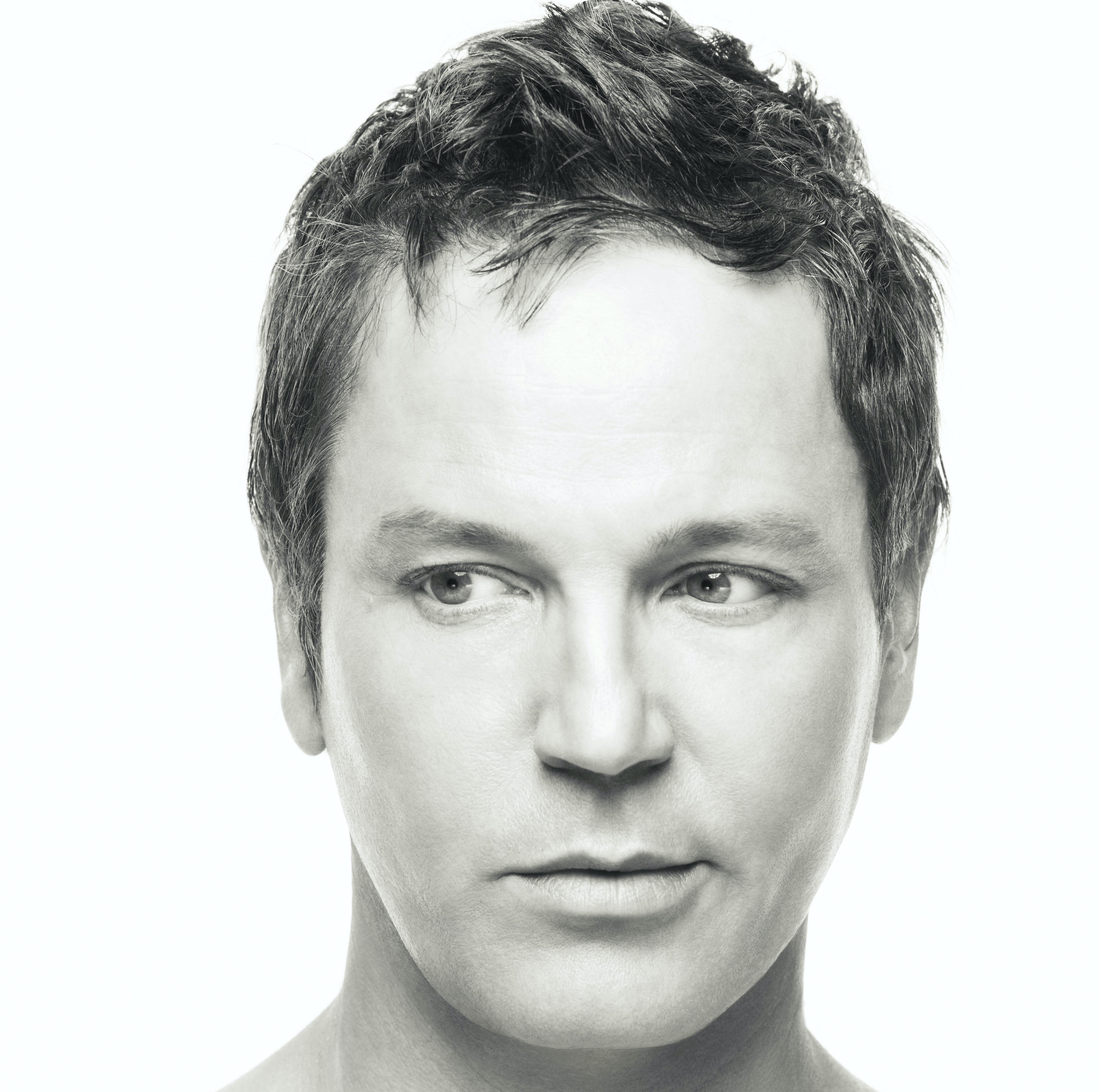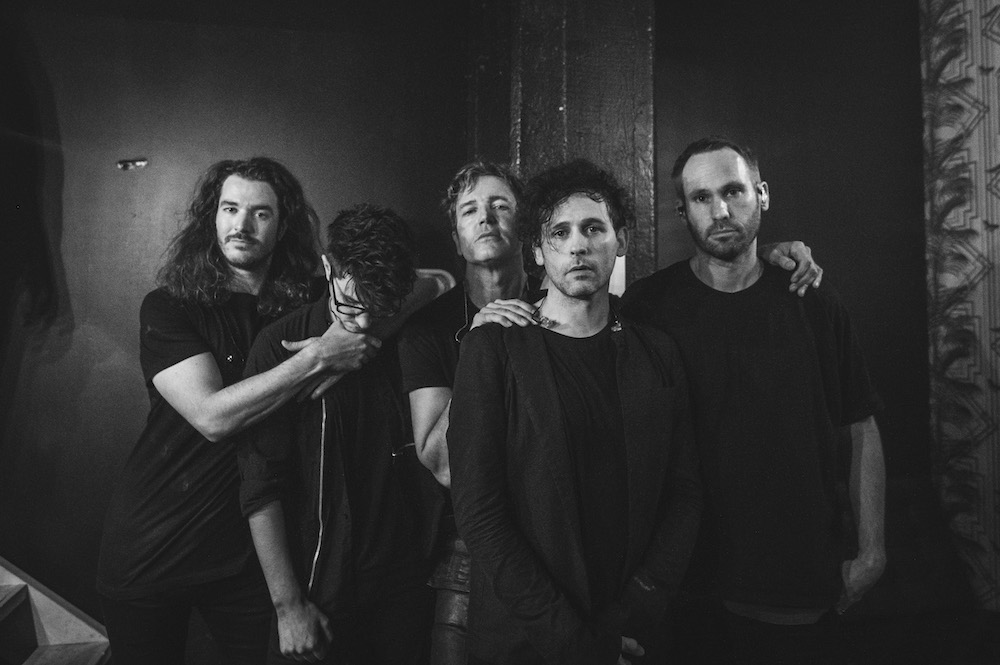
Miracle Fortress’s most recent album, “Was I The Wave?,” was released a few months back. We recently spoke with Graham Van Pelt about Miracle Fortress’s live shows and recording music.
We caught up with Miracle Fortress’s Graham Van Pelt a few months back at Webster Hall as Junior Boys were sound checking.
Miracle Fortress will be playing two gigs at CMJ. One is this Thursday (10/20) in Brooklyn at Public Assembly at 3:00pm, and the other is this Friday (10/21) at Arlene’s Grocery in Manhattan’s Lower East Side as part of the M for Montreal Party at 11:30pm.
What is the live set-up like at a Miracle Fortress show?
We’re joined by a drum pad. [laughs] There are live drums and some electronic drums happening at the same time. Some live looping. No computer—all samplers. A Roland SP-404 for drum triggering, a Roland SP-505 for a master clock and basslines and an Electro-Harmonix 2880, a more recent update on the 16-second delay.
Is the technology kind of daunting in a live context?
No, it’s pretty streamlined. Not very complicated.
What is the visual component to the live show?
We’ve been doing a bit of a light show. [Laughs] It’s sort of a small scale light show, it’s not ultra bright. It’s scaled down to a more personal level, but at the same time we have a lot of sound-activated lights that are triggered by the beat. We kind of perform a little bit in the dark, too. We don’t use videos or anything super literal.
It seemed rather like there was a ghostly quality to many of the songs on new LP “Was I The Wave?” and then you have a song called “Spectre.” It wasn’t overwhelming, of course, but was there sort of a theme of ghostliness or is that merely coincidental?
There’s a bit of aging of sounds in certain parts of the record for sure, which can definitely be construed as ghostly. “Spectre” is about the relationship with your own past, or the history of whatever it is you’re involved in. But, I wouldn’t go too far with that thought.
When you say aging your sound, what do you mean exactly?
Second or third generation loss in recording. I’m interested in that in parts—those, sort of, weird and unusual characteristics on the sounds. Not necessarily aging them to a specific era, but taking sounds and baking them or trying to get them to a point where they take on a new, unexpected quality and it becomes unique.
Is there any writing and recording while on tour? The reason I asked is because someone, I can’t recall whom, recorded an album on a plane. Then, of course, Gorillaz recorded an album on an iPad while on tour.
I can’t really get what I want to get on the road, but I do come up with roots and ideas for songs.
The song “Wave,” there were synenthesizer parts that reminded me of Cluster and Harmonia, two Krautrock bands. Were they an influence at all in the recording of this particular song?
Yeah, I’m a big Cluster fan but I didn’t directly have them in mind when recording the song. I listen to tons of drone and electronic music going all the way back in the ’70s. I do a lot of it on my own, although I don’t end up releasing it. It’s for my own private collection. [Laughs] And there was a bit of it that got onto the record with”Wave.” But, I’m definitely a big fan of this stuff.
What sort of equipment do you use to generate sounds?
I did a lot of stuff on the Moog Littly Phatty with pedals, which is ultra simple but it has a good, full tone. This was only because I was sharing a studio with someone who had one. For the most part, the majority of the stuff [on the album] is sampling. I will sample a sound out of a record or something and map it into a keyboard patch and do things that way. I use software as the primary recording medium but I tend to take things into the acoustic or analog domain to actually mix and manipulate the sounds, just because I don’t find it as entertaining to work in a digital environment all the time.
As far as the sounds that are actually in the tracks, I just find that you can’t quite get the range and the size staying in the box [of software]. I also like the unpredictability of bringing things out through the analogue equipment. In the digital environment you just set a preset, click that button and it’s in your song but you weren’t necessarily listening to what you were doing. It’s in there but you didn’t really arrive there via a lot of decision-making. I find that it is important not to move too quickly or work too fast on things like that.
Check out the music video for Miracle Fortress’s “Possession” below.
Miracle Fortress – Possession from Tim Kelly on Vimeo.